Muneshwara is a deity of boundaries — of thresholds between the settled and the wild, the living and the ancestral, the everyday and the sacred. Worshipped widely across Karnataka and Tamil Nadu, he is among the most quietly present of India's local guardian deities, standing watch over villages, fields, and communities that have called on him for generations.
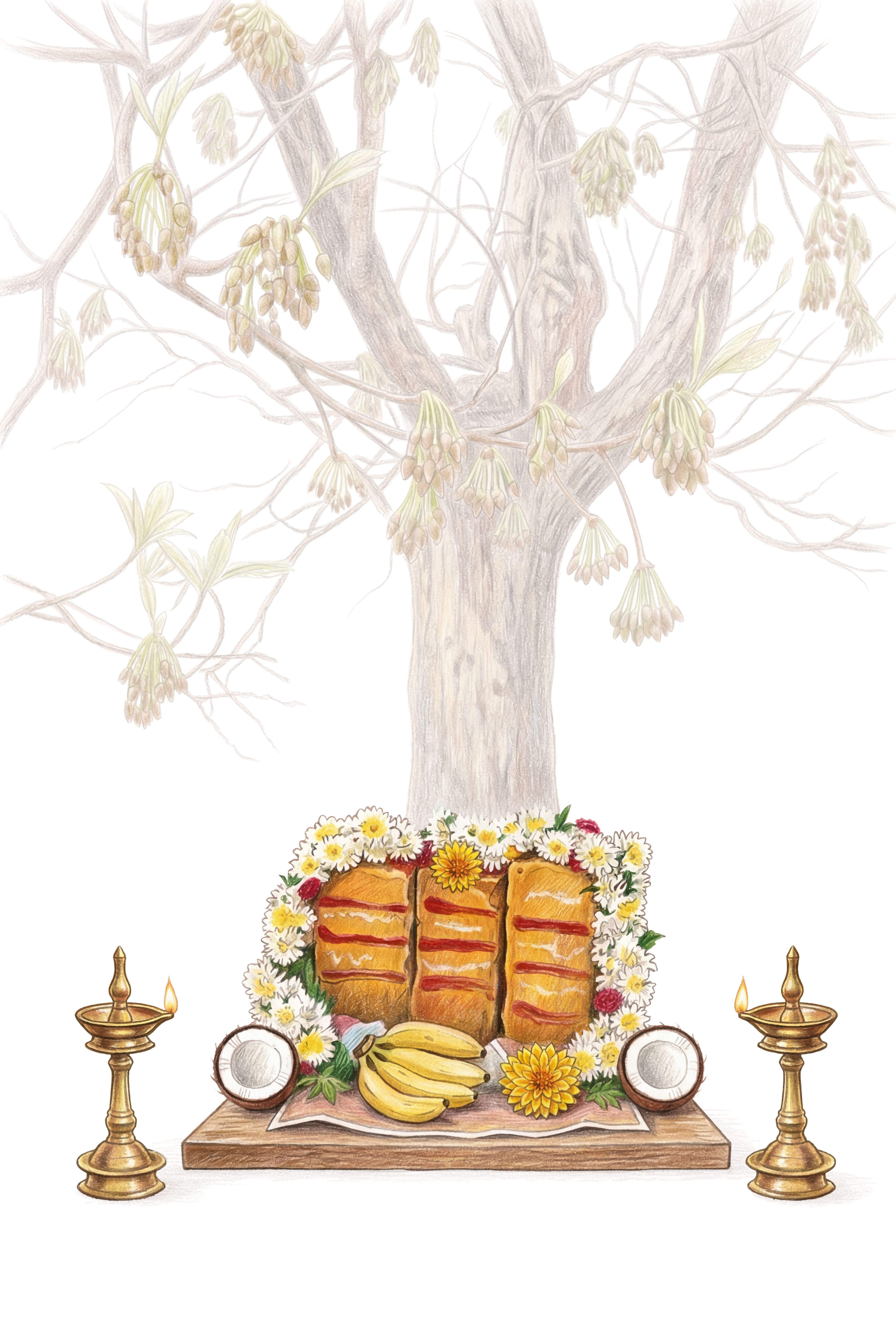
Unlike the deities of grand mythology, Muneshwara does not arrive with celestial fanfare. He is invoked in small rituals at the edge of the village, offered turmeric and coconut and flame, honoured with drums and devotion rather than elaborate liturgy. He is protective, immediate, and deeply tied to place.
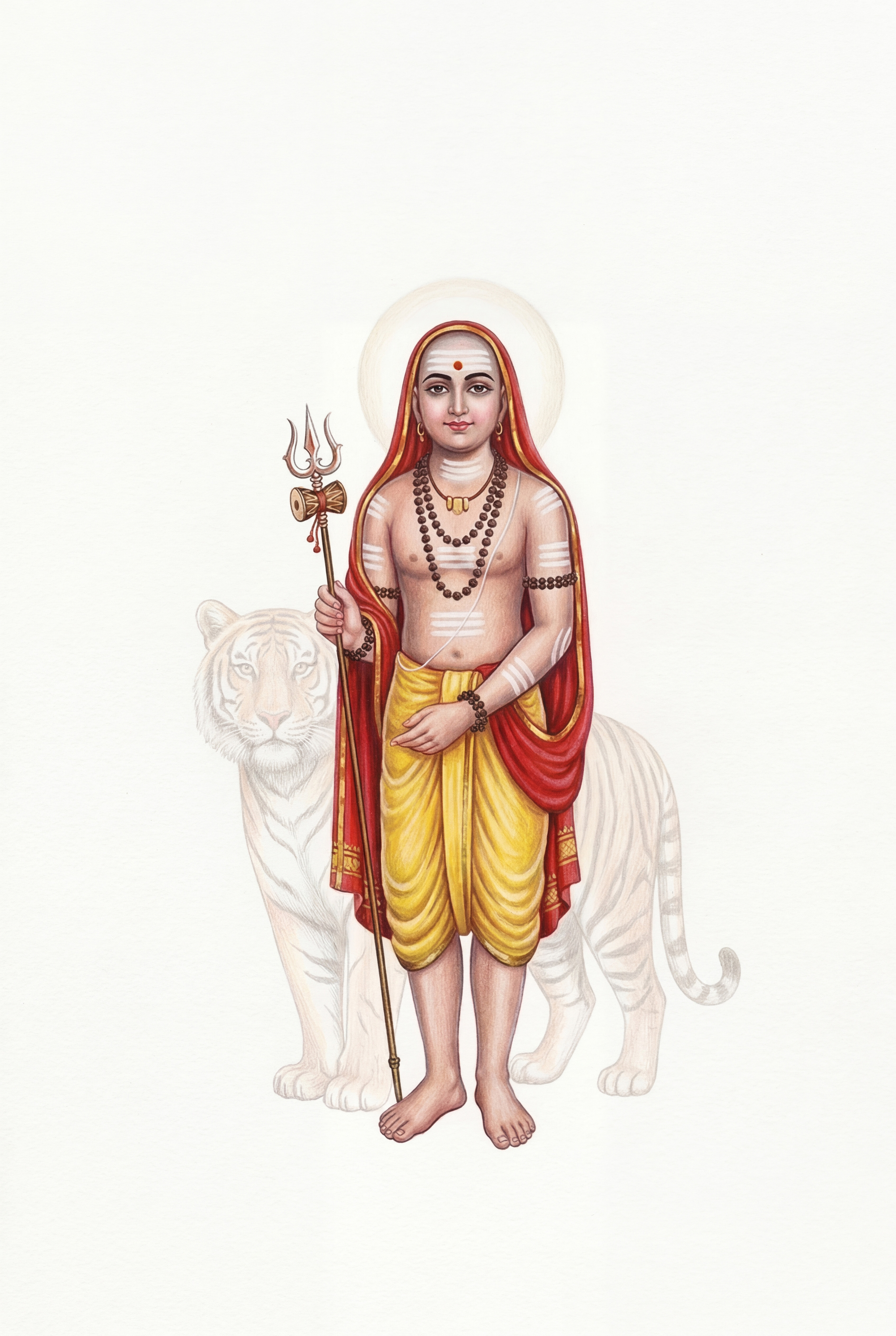
Depicted here in his iconic form — a commanding stance, deep ochre skin, red garments, the trident of Shiva — Muneshwara embodies the quiet authority of a guardian who has always been present. His gaze does not seek the horizon. It watches the threshold, steady and unwavering.
For the communities that venerate him, Muneshwara is not an abstraction. He is the protector whose name is spoken at moments of uncertainty, whose blessings are sought before journeys begin and harvests are reaped. He is local in the truest sense — not because his reach is small, but because his presence is personal.