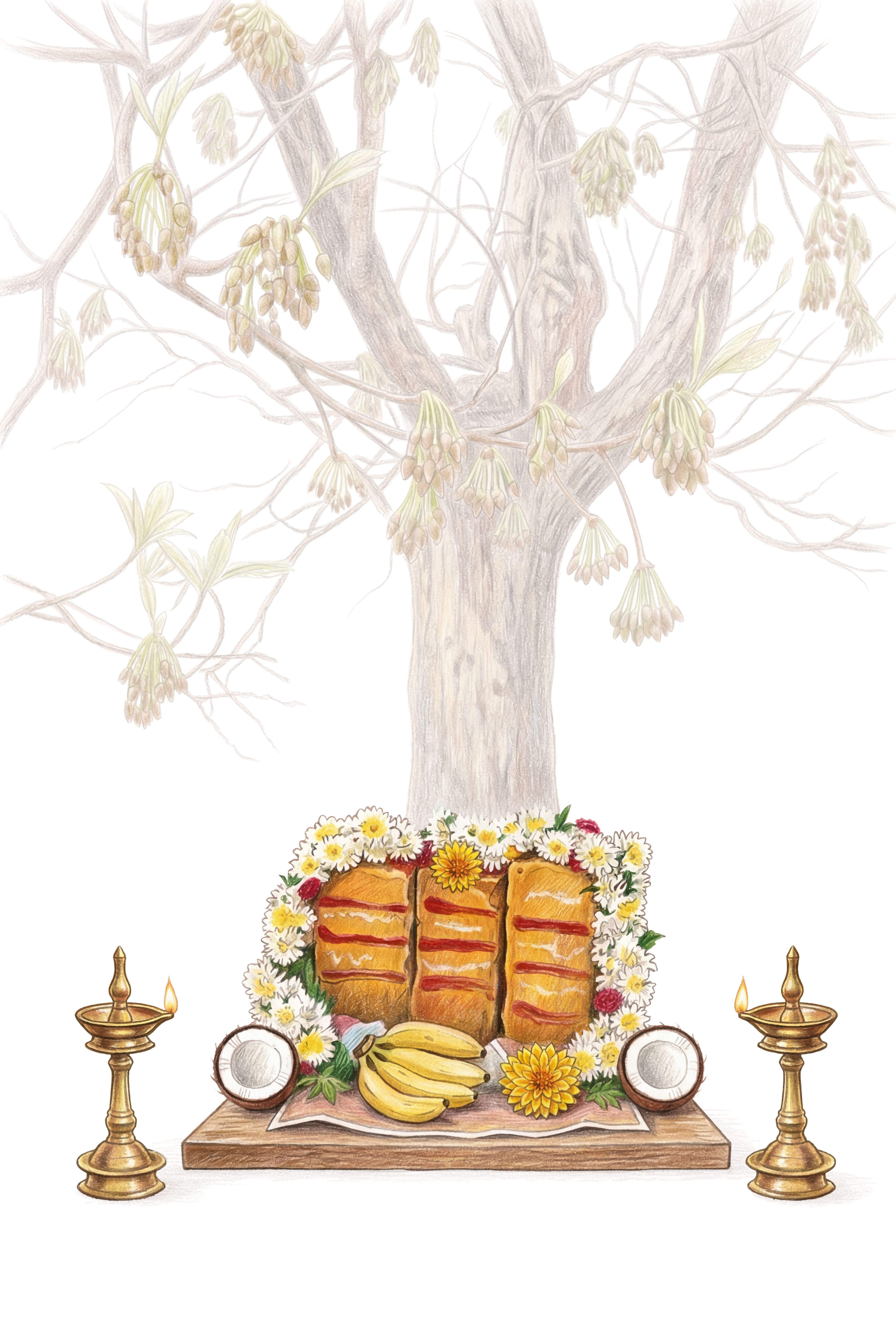
Deep in the forested hills of Chamarajanagar district, Karnataka, rises a sacred place known as Male Mahadeshwara Hills — or simply MM Hills. Here, a young Shaivite saint is believed to have arrived centuries ago, walking barefoot through dense tiger country, guided only by devotion to Shiva.
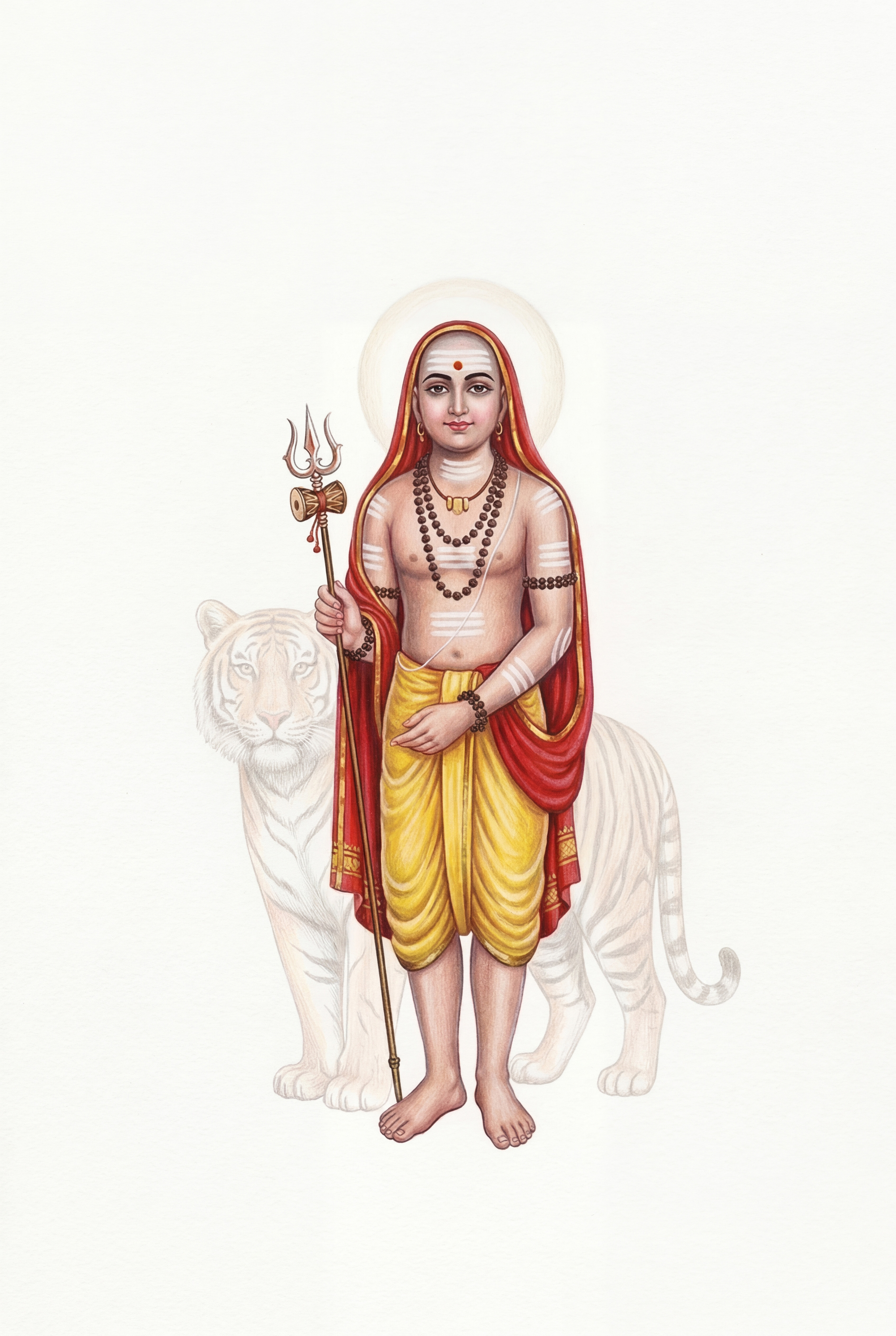
Male Mahadeshwara is venerated as both saint and deity — a protector of the communities living in and around these hills. He holds a trishul, wears rudrāksha beads, and carries the quiet authority of someone who chose hardship over comfort in service of something larger than himself.
The white tiger that stands beside him in depictions is not his vehicle in the conventional sense. It is a companion — a fellow inhabitant of the same wild forest. Where Mahadeshwara walked, tigers walked with him. The forest was not a place to fear but a place to belong.
Pilgrims travel great distances to reach the hilltop temple, especially during the annual Jatre festival. The journey itself — through winding forest roads, past waterfalls and ancient trees — is considered part of the devotion. For the forest-dwelling communities of the region, his presence is not mythological. It is living, immediate, and protective.